Arnica as a Natural Remedy
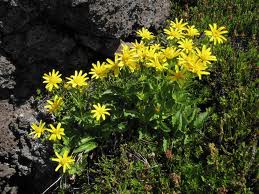
Description: Arnica, also known as arnica montana, is an aromatic perennial which grows to a height of about one foot. It has downy, egg-shaped leaves and bright yellow daisylike flowers.
Part used: The flower and rhizome are used in herbal medicine.
Where found: This herb grows in the mountains of Europe, Siberia, Canada, and the United States.
Traditional uses: This herb is an antibiotic, anti-inflammatory, and pain reliever. Extracts from this herb have been used in both herbal and homeopathic forms to help minimize the effects of tissue trauma and to assist in the healing process.
It has been used in Europe for centuries to reduce bruising and swelling and to shorten the recovery time after physical trauma.
It also has a long history of use by Native Americans as a major healing plant.
It is primarily used externally as a tincture or salve.
It is also one of the most important herbs in homeopathic medicine. It is used in a 3X dilution for motion sickness or in a 10X dilution for seizure disorders.
This herb is also used in treating carpal tunnel syndrome, fractures, and other injuries. It prevents bruising and swelling after traumatic skin injuries by preventing blood platelets from gathering at the site of the injury.
It is also useful for joint and rhuematic pain.
Double blind studies with marathon runners done in the early 1990's also found that applying this herb to the skin before an athletic event greatly reduced the pain and stiffness experienced afterwards.
More recent studies also indicate that the use of this herb may be effective in reducing postoperative swelling.
Other considerations: This herb is used in a cream form. It should not be applied to broken skin or to an open wound.
It should never be taken internally! Eating large quantities of the flower or roots can be poisonous.
It should not be used for more than two weeks at a time, and if a rash develops, its use should be discontinued.
Pregnant women should not use this herb in any form, as it contains a compound which can be used to induce labor.
This information is not intended to diagnose or treat any specific condition, nor is it intended to replace the advice of your healthcare professional.
Sources
Balch, Phyllis A., CNC. "Prescription for Nutritional Healing". Garden City, NY.: Avery Publishing Group, 2006
Ritchason, Jack, ND. "The Little Herb Encyclopedia". Pleasant Grove, UT.: Woodland Health Books, 1995
Encyclopedia.com