Andiroba as a Natural Remedy
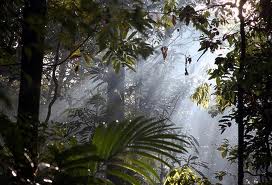
Description: Andiroba is a rain forest tree which can reach a height of up to 300 feet. It produces fragrant flowers, and a large, brown nut about three to four inches across which resembles a chestnut.
Part used: The oil contained in the nut, the bark, leaves and seed oil are the parts used in herbal medicine.
Where found: This tree grows in tropical Brazil, Colombia, and Guyana.
Traditional uses: The oil from this herb is an anti-inflammatory. It promotes normal circulation to the skin and relieves pain and swelling.
A tea made from the bark and leaves of this tree has been used to reduce fever and to inhibit worms. It has also been used externally to treat skin problems, ulcers, and insect bites, as well as for an insect repellant.
The oil from the seed is used as an antiarthritic and anti-inflammatory, and the oil from the fruit is used to suppress coughs.
Tests have confirmed that the bark is antibacterial, the flowers are antitumor, and the wood is antifungal.
Gel caps containing the oil have been used to treat internal cancers.
Hot oil from this herb can be rubbed into the skin to relieve arthritis and rheumatism.
The oil from this herb is rich in omega-3 fatty acids, and has been proven to be very effective at speeding the healing of fractures.
This oil also helps speed the healing from skin damage due to cuts, scrapes and abrasions, gonorrhea, insect bites, and psoriasis.
Other considerations: The oil from this herb is also used as a base for antiwrinkle creams such as Aveda and Oil of Olay.
This information is not intended to diagnose or treat any specific condition, nor is it intended to replace the advice of your healthcare professional.
Sources
Balch, Phyllis A., CNC. "Prescription for Nutritional Healing". Garden City, NY.: Avery Publishing Group, 2006
Ritchason, Jack, ND. "The Little Herb Encyclopedia". Pleasant Grove, UT.: Woodland Health Books, 1995
Encyclopedia.com